About the State Hospital
Although the State Hospital shares the same values, aims and challenges as the rest of the NHS in Scotland, it is unique because it has the dual responsibility of caring for very ill, detained patients as well as protecting them, the public and staff from harm.
In 1994 legislation went through Parliament to bring the State Hospital legally into the National Health Service in Scotland as a National Health Board – the State Hospitals Board for Scotland – accountable to Scottish Ministers through the Scottish Government. The State Hospital operates within a Regulatory Framework, set by the Scottish Government.
The State Hospital is one of four high secure hospitals in the UK. Located in South Lanarkshire in central Scotland, it is a national service for Scotland and Northern Ireland and one part of the pathway of care that should be available for those with secure care needs. The principal aim is to rehabilitate patients, ensuring safe transfer to appropriate lower levels of security.
Overall, there are 140 high-secure beds (plus four beds for emergency use) for patients requiring maximum secure care: 12 beds specifically for patients with an intellectual disability. The Women’s Service has a capacity to care for up to six females.
A range of therapeutic, educational, diversional and recreational services including a Health Centre is provided.
Partnership working with South Lanarkshire Council is well established and provides social work services for patients and their families in addition to liaising with patients’ designated Mental Health Officers (MHOs) across the country.
The Forensic Mental Health Services Managed Care Network (Forensic Network) is hosted by the State Hospital.
Well developed relationships exist with the Mental Health Tribunal Service for Scotland and the Mental Welfare Commission for Scotland, and good partnership working is in place across the Forensic Network to ensure these patients are transferred as required.
Patients
Patients are admitted to the Hospital under The Mental Health (Care and Treatment) (Scotland) Act 2003 / 2015 and other related legislation because of their dangerous, violent or criminal propensities.
Patients without convictions will have displayed seriously aggressive behaviours, usually including violence.
Every year there are around 20-35 patient admissions and discharges. The exact figures are provided in the State Hospital’s annual report.
Around 70% of our patients are subject to special restrictions set by Scottish Ministers. These restrictions are put in place because of the nature of their offence, their history, and the risk they may present if released without appropriate safeguards. The restrictions remain in place for as long as necessary to protect the public from serious harm. This group also includes patients who are going through criminal court proceedings and are under the supervision of Scottish Ministers.
All patients are around 40 years old. The most common primary diagnosis is schizophrenia. The average length of stay is just over five years, with individual lengths of stay ranging from less than one month to over 36 years.
Staff
The State Hospital employs around 680 staff within its 60-acre campus.
Facilities
“The State Hospital provides the skills, culture, rehabilitation ethos and fit-for-purpose physical facilities necessary for high quality care of forensic patients.”
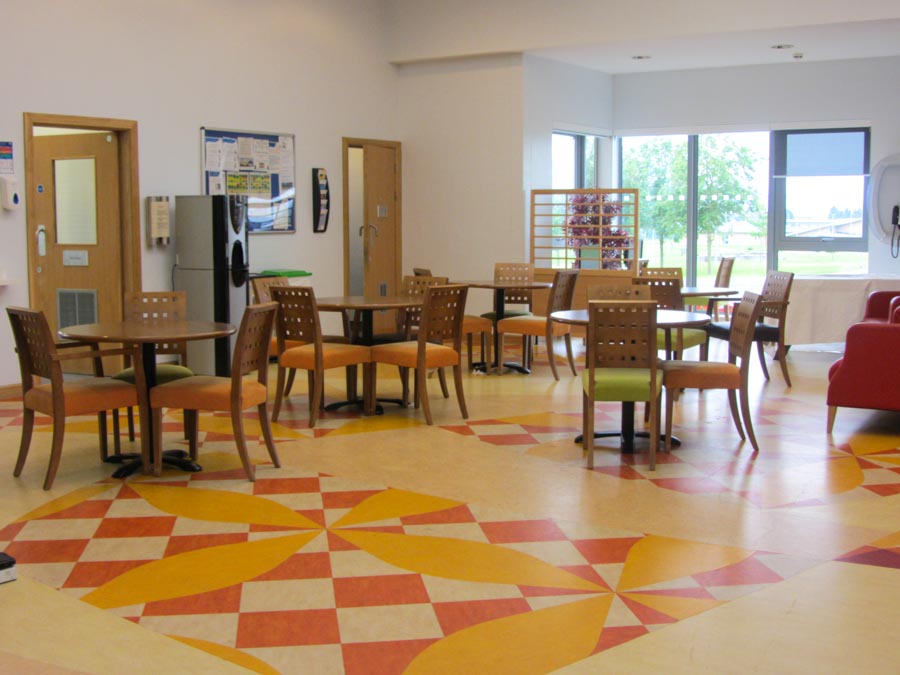
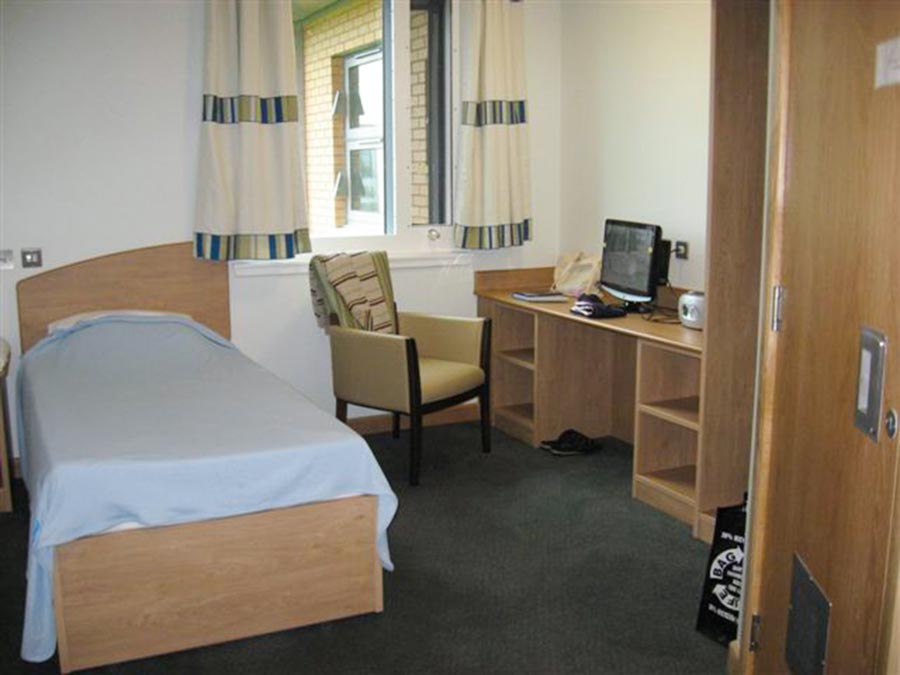
The wards are organised into four units. Each unit has three ward areas, with 12 beds in each area, giving a total of 36 beds per unit. Clinical team offices, admin support and staff facilities are provided within an office accommodation block in each unit to facilitate multi-disciplinary engagement. An activity hub in each unit allows wards to share a range of facilities including day spaces, group treatment and therapy facilities as well as multi-function spaces. All wards have domestic kitchens and laundry areas that support patients with daily living skills. Privacy and dignity is promoted with en suite facilities, and patients can access outdoor spaces including garden areas.
All patient therapy and activity is under the one roof within the Skye Centre. The Family Centre for visiting reflects the needs of patients, carers and children.
All facilities have a functional design to maximise observation, and optimise safety and security, whilst maintaining a therapeutic balance.